We prepare your AI development environment with the right context, tooling, and guardrails — so your team builds right the first time.
Most AI-assisted development fails not because the tools are weak, but because the context is wrong. Developers prompt their way through problems without specifications, architecture constraints, or quality gates — and get code that looks right but breaks under real conditions.
The Forge is our methodology for preparing AI development environments before a single line of code is generated. We configure specs, hooks, skills, and MCP servers so that tools like Kiro, Claude Code, and Cursor produce SAP-grade output from day one.
Start with specifications, not prompts. When your AI tooling understands the architecture, naming conventions, extension patterns, and quality standards of your SAP landscape — the code it generates is right the first time.
Every Forge deployment is tailored to your SAP landscape, team maturity, and development workflow.
Structured specifications that give AI tools the architectural context to generate correct code. Not prompts — proper engineering documents.
Pre-commit and review hooks that catch issues before they reach production. Automated quality gates built into the workflow.
Purpose-built Claude Code skills encoding SAP best practices for RAP, CAP, Fiori, and ABAP Cloud.
Model Context Protocol servers that connect AI tools directly to SAP systems for live introspection.
Community and official Model Context Protocol servers for SAP development workflows.
| Server | Description |
|---|---|
| Official SAP MCP Servers | |
| SAP Fiori MCP Server | Fiori app generation and modification workflows |
| CAP MCP Server | AI-assisted CAP development with CDS-aware context |
| UI5 MCP Server | UI5-aware development support for OpenUI5 and SAPUI5 |
| SAP MDK MCP Server | AI-assisted SAP Mobile Development Kit workflows |
| UI5 Web Components MCP | AI-assisted development with UI5 Web Components |
| Documentation & References | |
| MCP SAP Docs | Unified SAP developer docs search over curated sources |
| ABAP MCP Server | ABAP-focused documentation variant |
| SAP Notes MCP | Search SAP Knowledge Base and SAP Notes |
| SAP AI Core Docs MCP | Semantic search across AI Core documentation |
| SAP BTP Docs MCP | Semantic search across BTP documentation |
| ABAP & ADT Development | |
| Vibing Steampunk | ADT-to-MCP bridge for ABAP and AMDP workflows |
| MCP ABAP ADT | ABAP system interaction via ADT API |
| ABAP MCP Server SDK | Build MCP servers in ABAP |
| ABAP Accelerator MCP | Enterprise-grade ABAP code operations |
| OData & Gateway Integration | |
| OData MCP Bridge | Go OData-to-MCP bridge with v2/v4 support |
| OData MCP Proxy | Config-driven MCP server exposing OData/REST APIs as tools |
| AI Core MCP Server | SAP AI Core lifecycle APIs as MCP tools |
| BTP MCP Server | BTP Core Services as MCP tools |
| Integration & Automation | |
| MCP Integration Suite | General SAP Integration Suite operations |
| CPI MCP Server | SAP Cloud Integration operations |
| MCP Trading Partner Mgmt | SAP Integration Suite TPM workflows |
| SAP HANA & Datasphere | |
| HANA MCP Server | HANA and HANA Cloud integration |
| SAP Datasphere MCP | Feature-rich Datasphere API interaction |
| GUI Automation | |
| MCP SAP GUI Server | Coordinate and input automation for SAP GUI |
| SAPient MCP | RoboSAPiens-based GUI automation |
| AI Skills & Developer Tools | |
| SAP Skills for Claude Code | Large SAP skill set for Claude Code across CAP, Fiori, ABAP and BTP |
| RAP Skills | SAP RAP development support for Claude Code |
Find out what’s actually stopping your SAP team from shipping at AI speed.
SAP development teams are under pressure to deliver more with less. S/4HANA migrations, clean core refactoring, new Fiori apps, BTP integrations — the backlog is growing while budgets are not.
AI-assisted development tools are genuinely capable. But almost no SAP shop has moved beyond individual developers experimenting on their own. There is no method, no standard, and no way to measure whether AI is actually making the team faster or just creating a new category of technical debt.
The result: developers who use AI tools are 3–5× faster individually, but the organisation sees maybe a 10% throughput improvement because nothing around them has changed — the review process, the architecture patterns, the testing approach, the way work is scoped and estimated. The acceleration is real but trapped inside individual contributors.
A focused, high-level readiness assessment designed to run in a 2–3 hour workshop with your SAP development leadership and delivery team. It evaluates four dimensions that determine whether AI-assisted development will land as a team-wide capability — or remain a set of disconnected individual experiments.
Four dimensions that determine whether AI-assisted development lands as a team-wide capability.
The foundation that AI amplifies. A developer who does not understand RAP cannot effectively use AI to generate RAP code — they cannot evaluate the output.
Can your developers evaluate and correct AI-generated code, or are they accepting output they don’t fully understand?
AI-assisted development produces code fast. But code against what? If the extension model is unclear, naming conventions are inconsistent, and there are no API boundaries — AI just produces bad code faster.
Is your architecture ready to receive high-velocity development, or will speed just amplify existing structural problems?
This is where AI either fits into an existing workflow or does not. A team with no code review process will not catch AI-generated defects. A team with no test patterns cannot validate AI output.
If a developer started producing code 5× faster tomorrow, could your workflow actually absorb it — or would review, testing, and deployment become the new bottleneck?
The difference between a developer using ChatGPT in a browser tab and a team running structured generation patterns with validated prompt libraries and architectural guardrails.
Is AI tooling embedded in your development methodology, or is it individual preference?
Each dimension is scored across four levels of AI-assisted development maturity.
Traditional SAP development. No AI integration. Classical estimation, manual coding, conventional review and testing patterns. This is where most SAP teams are today — and it is not a failure. It is a baseline.
Individual developers using AI tools on their own initiative. Productivity gains are real but unmeasured and inconsistent. No team standard. The organisation cannot distinguish AI-assisted output from conventional output.
AI-assisted patterns are documented, shared, and expected. Prompt libraries exist for common patterns. Output validation is part of the workflow. The team measures velocity impact. New developers onboard into an AI-assisted methodology, not just a toolset.
AI is embedded in the methodology end-to-end: scoping, generation, review, testing, documentation. Architecture supports high-velocity output. Estimation models reflect AI-assisted capacity. The team ships at multiples of traditional velocity with equal or better quality.
A single-page view showing where your SAP development team sits across all four dimensions. Clear, visual, no ambiguity.
The gaps between dimensions tell the real story. Strong architecture but weak AI methodology needs a different intervention than a team experimenting with Copilot on top of unrestructured ECC code. We show you which gaps are costing you the most throughput.
Not a 50-page roadmap. The 3–5 specific things that would move your team from its current state to measurable acceleration within a quarter. Each intervention is mapped to a dimension, an expected impact, and a level of effort.
This diagnostic exists because we live at the intersection that most firms don’t — deep SAP architecture expertise (ABAP Cloud, RAP, BTP, clean core) combined with a production-tested AI-assisted development methodology. We built the tooling. We use it on real projects. We deploy it to client teams. We are not selling AI hype or SAP theory. We are showing you exactly where your team stands, what it would take to ship at a fundamentally different velocity, and how our AI harness gets you there.
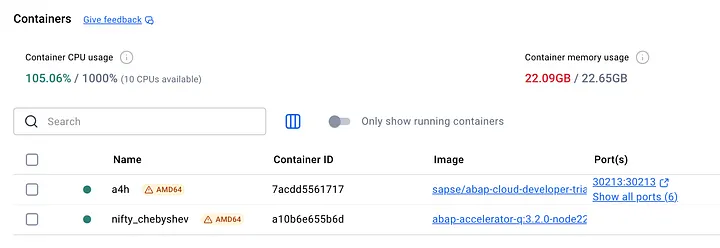
AI-assisted ABAP development using Amazon Q in the IDE.
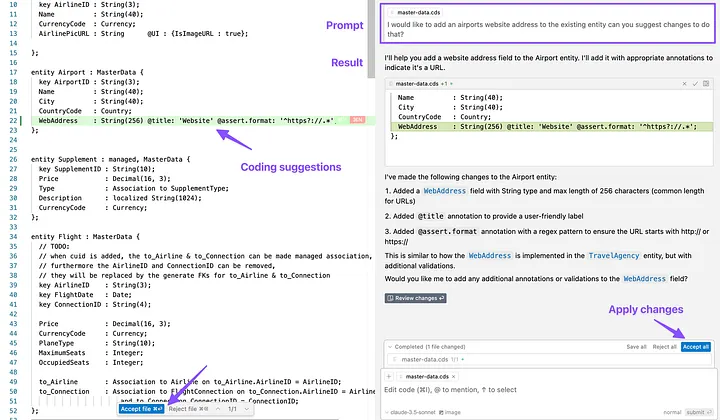
Supercharge SAP CAP development with Cursor AI in Business Application Studio.

AI-native ABAP Cloud development with Claude Code and VSP on Mac.
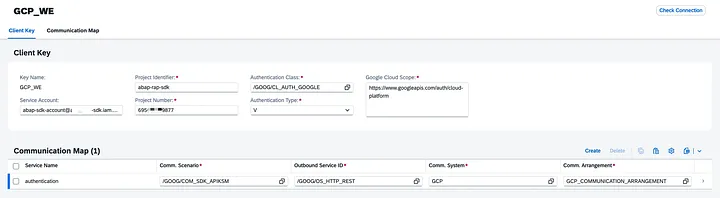
Integrate Google Cloud services directly into ABAP Cloud applications.
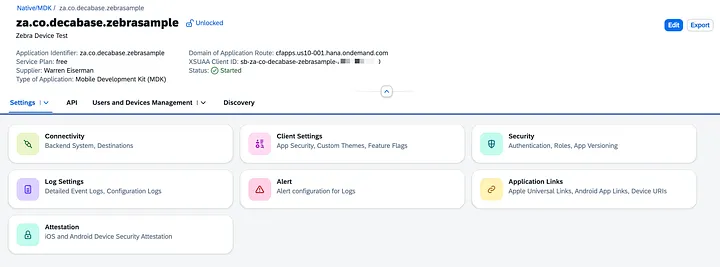
Build offline-capable mobile apps with barcode scanning for SAP ERP.
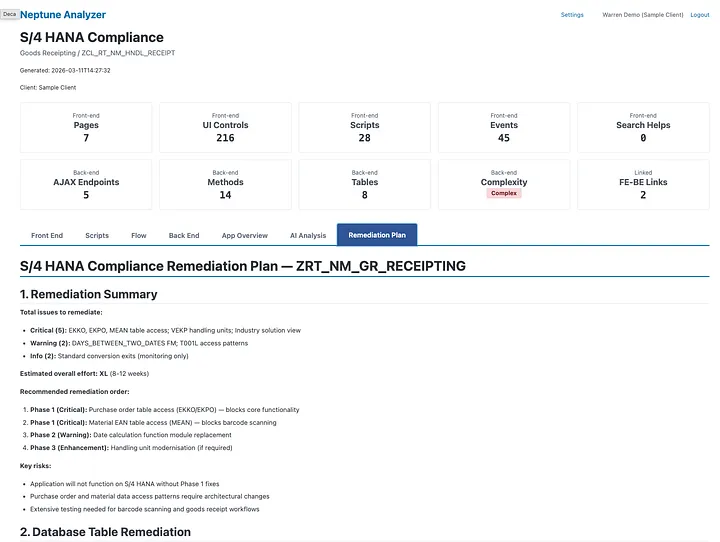
Getting Neptune Software apps ready for S/4HANA migration and modernisation.
Tell us about your SAP challenge — whether you need us to build it, enable your team to build it, or both.
Start a Conversation →