See it on a phone
See it in action.
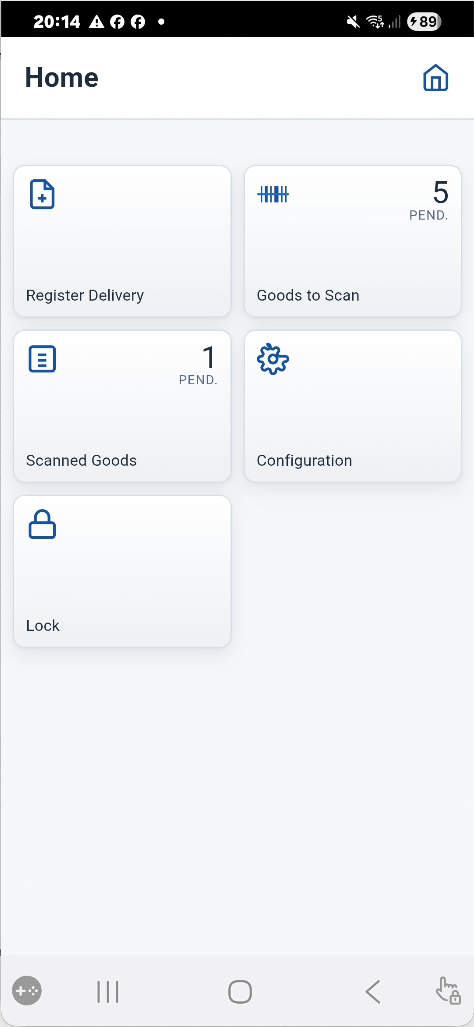
Goods receipt homepage
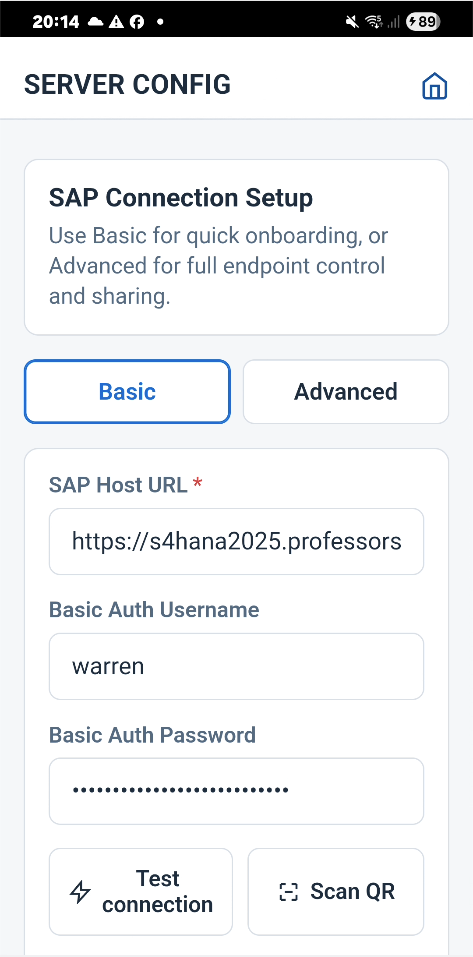
App configuration
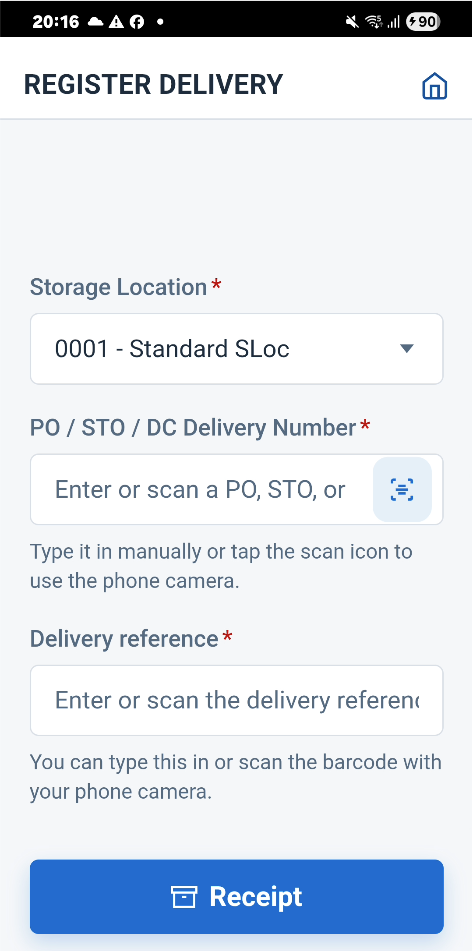
Register delivery
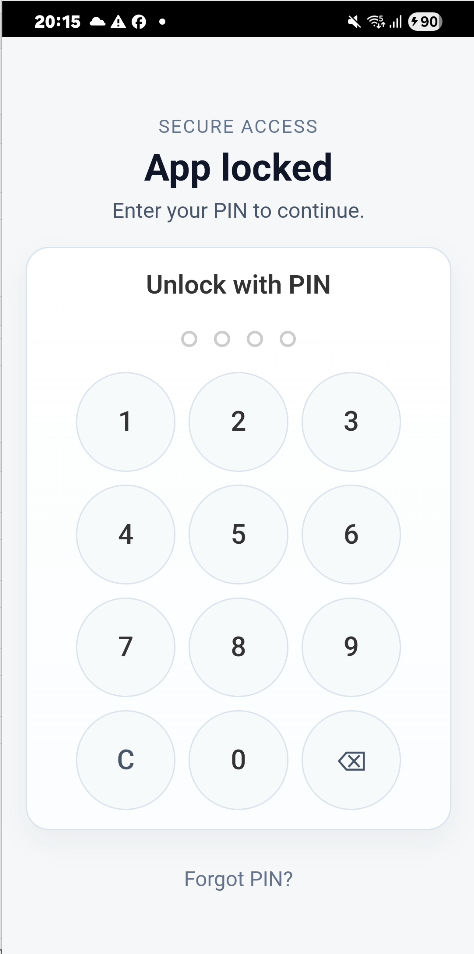
PIN code protection
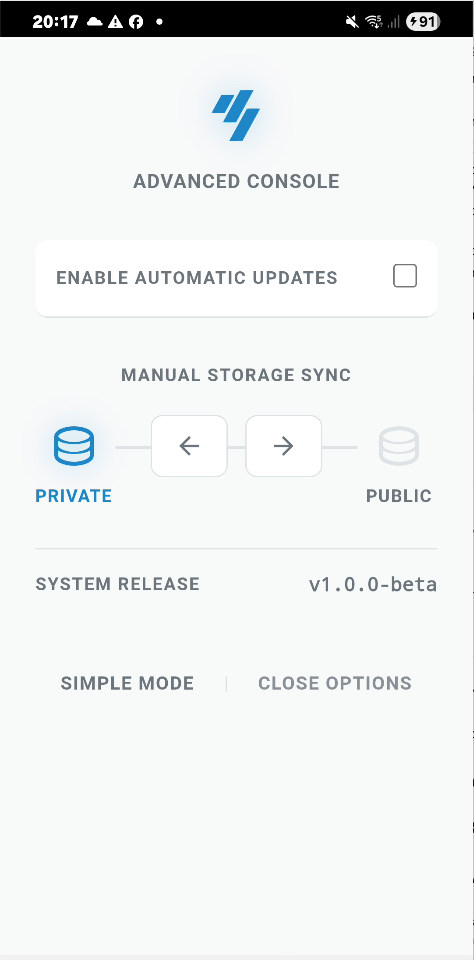
Advanced settings
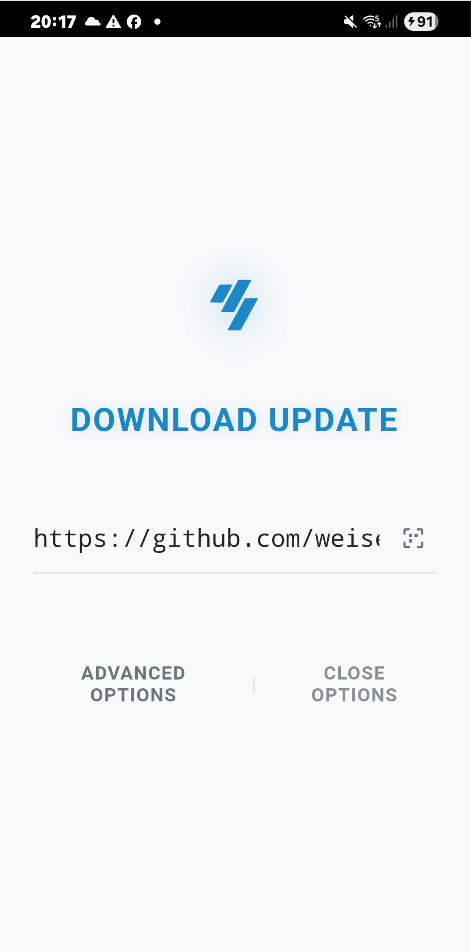
Over-the-air update
Dedicated mobile apps for S/4HANA Cloud ERP, custom native Android or hybrid web, built by senior architects. Staff work where work happens, on hardware you already own, and adding the next hundred users costs you nothing.
Goods Receipt ExampleMany IT leaders run S/4HANA Cloud ERP without a complete view of what is happening where the work is. Not because they lack capability, but because the system does not reach the warehouse floor, the plant, or the yard. When the people doing the work can see and update information on the spot, execution becomes more predictable.
Your employees do not work at a desk. They work on the loading bay, in the plant room, at the customer site.
Every hour data sits on a clipboard before someone types it in is an hour your ERP is wrong. Put SAP in their hand and that gap closes. Goods are receipted as they land. Confirmations are captured at the machine. Approvals happen in the coffee queue, not at the end of the week.
We build two kinds of app to get you there. Both talk straight to your backend over standard OData. Both are yours to keep.
No backend ready yet? We build the experience API on BTP or on-stack RAP, the app, the rollout, and handover.
The app talks to OData on S/4HANA Cloud ERP, ABAP on BTP, or CAP. No gateway licence, no extra runtime, no per-user mobile SKU.
A dedicated native Android application, built for your process and your devices. Full access to the hardware, the most responsive experience a phone can give, and a binary that belongs to you.
Our framework for building SAP-connected apps fast. An Android native shell wrapped around web views that talk directly to your backend via OData. Quick to build, quick to change, and cheap to keep current.
Not sure which one fits? That is the first conversation we have. We look at your process, your devices, and how often the app will change, then recommend whichever is cheaper for you to run.
Tell us what your team needs to do on a phone. We will come back with the build that fits, what it costs, and how long it takes.
Curious what a custom mobile app could look like for your company? →Two capabilities that come with the hybrid option specifically, because the UI lives in a web view, not in a binary sitting on every device.
Deploy app updates, bug fixes, and new features directly to devices in the field. No app store submissions, no manual installs, no downtime. Simpler management for every device in your fleet.
Building a new mobile app should not be a project. Our framework and tooling make it straightforward to spin up new apps, modify existing ones, and hand everything over to your team with clear instructions.
Licensed platforms charge for every person on the app, every year. We do not. Adding the next hundred users costs nothing.
No runtime fee sitting between you and your own data. You pay to build the app once, not to keep it switched on.
The app talks straight to your standard OData services. Nothing extra to license, patch, or renew.
You get the source, the build pipeline, and the documentation. Your team can maintain it. So can anyone else.
You already pay for users on Cloud ERP. Do not add a licensed mobile platform on top.
Barcode-driven receiving, putaway, and picking workflows on Android handhelds connected to warehouse in S/4HANA Cloud ERP.
Offline-capable work orders, checklists, and photo capture for technicians working in areas with limited connectivity.
Real-time approval workflows for purchase orders, leave requests, and payment releases, straight from your phone.
Equipment inspection, notification creation, and work confirmation in Cloud ERP.
Not every app needs this. A shared warehouse scanner runs fine on a service user. But where approvals, personal data, or audit are involved, this is the add-on worth having.
The app reaches SAP through one shared technical user. Authorisations cannot differ per person, the audit trail says nothing about who acted, and credentials sit inside an app that can be pulled off any phone.
The signed-in employee’s identity travels the whole chain, phone to gateway to SAP. Nothing secret ships in the app, and SAP applies their own roles and writes their name in every log line.
No stored secrets. OAuth 2.0 with PKCE.
Entra ID and SAP Cloud Identity. Your login page, your MFA.
AppRouter, XSUAA, and Destination Service upgrade the token server-side.
Runs as the business user. Their roles and audit apply.
The employee signs in with your corporate identity provider: your login page, your password policy, your MFA. The app receives a token via the standard OAuth 2.0 PKCE flow and never sees credentials.
A gateway on SAP BTP, acting as a trusted confidential client, upgrades the user’s token for the platform. A phone can never perform this step itself, which is exactly why nothing sensitive lives on the device.
The Destination Service mints a digitally signed assertion naming the user. ABAP Cloud verifies the signature against its own trust configuration and maps the person to their business user.
The OData call executes as that business user. Their authorisations decide what they see, and every change is logged in their name. No technical user appears anywhere in the chain.
The app is a public OAuth client: no passwords, no API keys, no certificates in the binary. A lost or decompiled phone never exposes system credentials.
SAP applies each person’s own roles and records their name on every document and log line, giving traceability a shared technical user can never provide.
SAP Cloud Identity Services, AppRouter, XSUAA, Destination Service, and ABAP communication arrangements. Supported components only, with no custom identity infrastructure to maintain.
Proven end to end: an Android app signing in through Microsoft Entra ID, reading live OData from an SAP BTP ABAP Environment as the named business user, with authorisations and audit intact.
Goods receipt homepage
App configuration
Register delivery
PIN code protection
Advanced settings
Over-the-air update